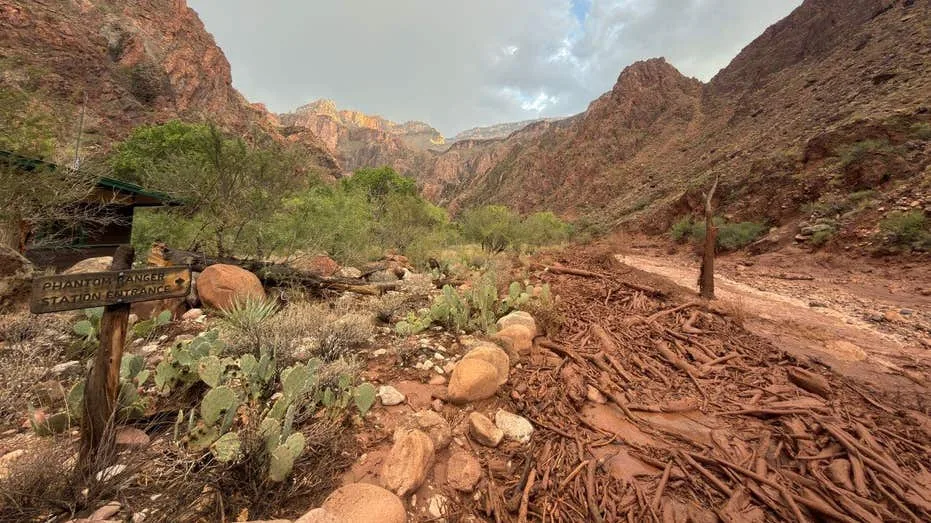
A significant flash flood event struck the Grand Canyon over the weekend, severing a vital water supply line and compelling the National Park Service (NPS) to enact severe water conservation measures. The incident has also triggered an intensive search operation for individuals believed to be missing.
The NPS announced Stage Four water restrictions would commence at noon on Monday, citing "extensive damage to infrastructure" caused by Saturday's floodwaters. This damage specifically impacted the Transcanyon Waterline, which is the primary source of water for the park. Officials have reported one confirmed fatality and an estimated 15 individuals potentially unaccounted for following the deluge.
Search and Recovery Efforts
On Sunday evening, park authorities confirmed the recovery of a 46-year-old man's body from the Colorado River. His identity has not yet been publicly disclosed.
The National Park Service has appealed to the public for assistance in gathering information regarding the 15 other people who are currently believed to be missing.
"The National Park Service is asking anyone who knows of hikers or backpackers who were in the inner canyon along the Bright Angel Creek corridor on August 29, as well as anyone who had a campground reservation in the affected corridor, to provide information to the National Park Service Investigative Services Branch."
Since the flooding occurred on Saturday, park officials have successfully evacuated a minimum of 62 individuals from the affected areas.
Park Operations and Restrictions
The Stage Four water restrictions now in effect across other parts of the park entail several critical measures. These include mandatory dry camping, meaning no access to water spigots, the temporary cessation of overnight accommodations, and a stringent prohibition on fires throughout the South Rim and inner canyon regions.
Impact on Infrastructure and Environment
According to the NPS, the severe flooding on August 29 primarily impacted Bright Angel Canyon and the Phantom Ranch vicinity. The torrents reportedly demolished almost all footbridges that crossed Bright Angel Creek.
State Officials Respond
Arizona Governor Katie Hobbs confirmed that state emergency management personnel are actively collaborating with federal and local agencies to support the ongoing search and rescue operations.
Governor Hobbs expressed her condolences on social media, stating:
"My heart is with the families and loved ones of every person unaccounted for after the flash flooding at the Grand Canyon. DEMA is coordinating with NPS and Coconino County Emergency Management to support search and recovery efforts."
Arizona Secretary of State Adrian Fontes described the flash flooding as "devastating." He extended gratitude to the first responders involved in the search for missing individuals and the evacuation of others from the affected zones.
In a statement, Fontes added:
"The physical damage includes a historic lodge near the bottom of the site and untold environmental upheaval. I send my prayers to the community as the search for those unaccounted for continues."