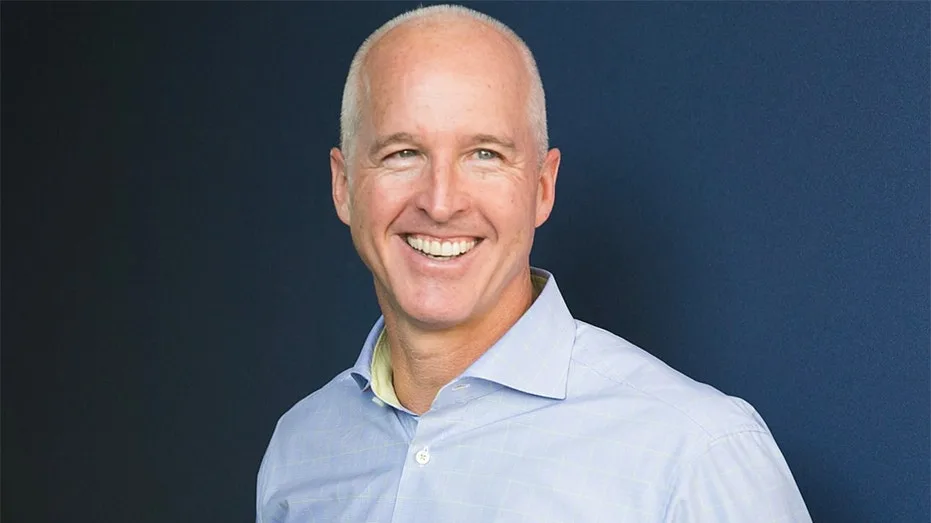
Mike Minogue, a former executive in the medical device industry, has successfully secured the Republican nomination for governor in Massachusetts. Minogue emerged victorious from Tuesday's primary contest, defeating Brian Shortsleeve, who previously held an executive position at the state's transit authority, the MBTA.
With the primary behind him, Minogue is now set to face the heavily favored incumbent, Democratic Governor Maura Healey, as she seeks a second term in office. While Massachusetts has consistently elected Democrats to Congress since 1996, the path to the governor's mansion has historically seen more Republican success in the state since the Reagan administration.
Minogue's Campaign Emphasizes Business Acumen
Throughout his campaign, Minogue consistently highlighted his extensive business experience. He pointed to his tenure at GE Healthcare and, notably, his leadership role at Danvers-based Abiomed. During his time as CEO of Abiomed, Minogue stated that the company was responsible for developing the world’s smallest heart pump. He also noted the expansion of the company's headquarters, which reportedly doubled in size, enhancing its operational capacity within the state and creating numerous employment opportunities.
Minogue also garnered significant attention on social media following an appearance by Canadian-American investor Kevin O’Leary, widely recognized as "Mr. Wonderful" from the television show Shark Tank. In a video supporting Minogue, O’Leary commented on his infrequent involvement with political campaigns.
"Massachusetts is ‘dead-money’ now — we need a guy like this to run the show," O’Leary stated in July.
Primary Victory and General Election Landscape
Minogue's path to the nomination was solidified by a strong showing at the state’s Republican convention, where he received an endorsement with 70% of the vote. Shortsleeve managed to secure his ballot position by exceeding the required 15% threshold by a narrow margin.
Financially, Minogue's campaign has been largely self-supported. In the first quarter of 2026, he contributed approximately $7 million of the more than $7.5 million he raised. His campaign also hosted a fundraiser featuring Vice President JD Vance, and Minogue has made donations to former President Trump and the Republican National Committee. In contrast, Shortsleeve raised about $646,500 during the same period.
The general election campaign has already seen early skirmishes. The Boston Herald reported that Governor Healey launched a last-minute advertisement during the primary, labeling Minogue as "MAGA Mike." According to the newspaper, this move suggested that the executive "has Healey’s attention" and may have inadvertently benefited Shortsleeve in the primary contest.
Governor Healey's renomination on Tuesday was uncontested, allowing her to advance unopposed. Similarly, Lieutenant Governor Kim Driscoll, also a Democrat, will move forward to the November election without a primary challenger.
Broader Republican Challenges Across the Commonwealth
Despite the gubernatorial primary, the Republican Party in Massachusetts faces broader challenges in the upcoming election cycle. The party has not put forward candidates in approximately half of the state’s congressional districts, nor in the races for secretary of state and state auditor. Furthermore, Anne Manning-Martin, a candidate for lieutenant governor, has been forced to pursue a write-in campaign due to issues with ballot signatures.
The absence of Republican contenders in several key districts, including those in the Berkshires, along the Massachusetts Turnpike corridor, and two exurban Boston-area districts to the north and west, means that Democratic nominees are guaranteed to advance in those races ahead of the November general election.
Historical Precedent for Republican Governors
While the current political climate in Massachusetts largely favors Democrats, the state government has not always been so reliably Democratic in recent history. Former Governor Charlie Baker, a moderate Republican, served two terms before Governor Healey, from 2015 to 2023.
Before Baker, former Senator Mitt Romney, now representing Utah, held the Massachusetts governorship from 2003 to 2007. Romney chose not to seek re-election, subsequently launching an unsuccessful presidential campaign against then-President Barack Obama.
Romney's tenure was part of a longer stretch of Republican leadership in the governor's office. From 1997 through the conclusion of Romney’s term, Republicans continuously held the state’s highest executive position. This era included former Governor William Weld, who was also a Libertarian presidential candidate, followed by former Governor Paul Cellucci, and then former Governor Jane Swift. Swift assumed the governorship after Cellucci was appointed as then-President George W. Bush's ambassador to Canada.
Prior to Weld, the office was held by 1988 Democratic presidential nominee Governor Michael Dukakis, and Democrats had more frequently occupied the governor’s office in the period preceding that era.